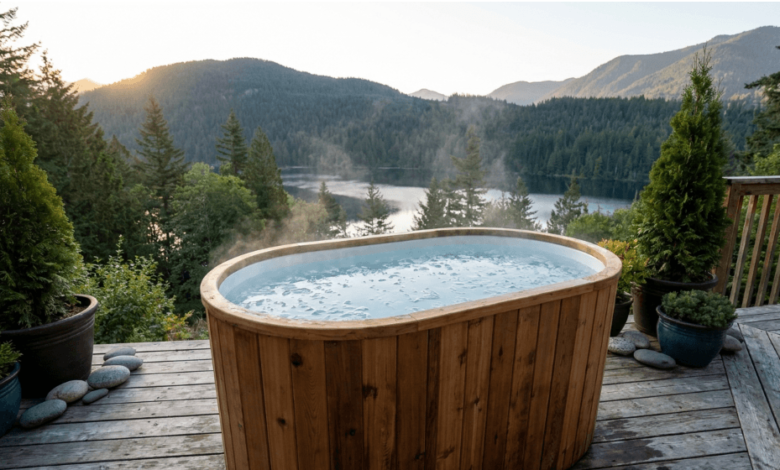
A compact home cold plunge costs $2,500 to $9,000 for the tank and chiller, but the real number after electrical work, a pad or reinforced surface, filtration supplies, and delivery typically runs $3,200 to $10,500. Renters and small-space buyers on the low end can get a working setup closer to $3,000 all in; homeowners adding a dedicated circuit and a wood-clad tank should plan for the higher end. Here is where the money actually goes, step by step.
Step 1: Price the Tank and Chiller Together
The chiller is usually the bigger line item, not the tank. A basic 1/2 horsepower chiller paired with a rotomolded plastic tub runs $2,500 to $4,500. Stepping up to a 3/4 or 1 horsepower chiller with a stainless or wood-clad tank pushes the total to $6,000 to $9,000. Ice-only tubs without a chiller can be had for under $1,000, but the ongoing cost of ice (40 to 80 pounds per refill, several times a week) often erases the up-front savings within the first year for anyone using it regularly.
Step 2: Budget for Electrical Work
Most residential chillers require a dedicated circuit separate from other household loads, usually 20 amps at 120V or a 240V line for higher-horsepower units. A licensed electrician typically charges $300 to $800 for the run, with the price climbing if the plunge sits far from the electrical panel or if the run has to go outdoors through conduit. Skipping this step and plugging a chiller into a shared circuit is a common way to trip breakers and shorten the equipment’s life.
Step 3: Account for the Surface It Sits On
A filled compact tub with someone inside can weigh 500 to 900 pounds, which most concrete patios and reinforced decks handle without modification. A wood deck that was not built with that load in mind may need a support check or a small concrete paver pad, adding $200 to $600. Spool-size plunges above 200 gallons generally need a proper reinforced pad, which is a different and larger project entirely.
Step 4: Add Filtration and Water Care Supplies
A cartridge or sand filter system runs $150 to $400 up front, and cartridges typically need replacing every one to three months at $20 to $50 each depending on use frequency. Many home units pair filtration with an ozone generator to reduce how often the tank needs shocking with chemical treatment, which adds a modest amount to the initial cost but saves on ongoing water care.
Step 5: Factor In Delivery and Setup
Compact tubs often ship via standard freight and can be set up by one or two people in under an hour, keeping delivery costs to $100 to $300 in most regions. Larger tanks or wood-clad models may require white-glove delivery or a small crew for placement, which can add $200 to $500. Buyers comparing full pricing across models, including what is bundled with delivery, can check current listings at sweatdecks.com/collections/cold-plunge before finalizing a budget, since bundled filtration or a included cover changes the real per-unit cost more than the sticker price alone suggests.
Step 6: Plan for the Monthly Running Cost
Once installed, the chiller is the main ongoing expense. A 1/2 to 1 horsepower unit running several hours a day typically adds $15 to $45 a month to an electric bill, with units in direct sun or hot climates running toward the higher end since the chiller has to work harder against ambient heat gain. Combined with filtration cartridges and occasional water treatment, total annual upkeep for a home-sized plunge lands around $150 to $400 beyond the electricity.
Step 7: Weigh It Against a Recovery Studio Membership
Cold plunge studios and recovery clubs typically charge $30 to $60 per visit, or $100 to $250 a month for unlimited access, which sounds cheap next to a $5,000 home unit until the math is run out over a couple of years. Someone plunging three times a week at a studio spends $1,300 to $3,000 a year just on visits, before factoring in drive time. A home unit at $3,200 to $10,500 all in, with $150 to $450 a year in upkeep afterward, tends to break even against studio membership somewhere between 18 months and three years depending on usage frequency and which end of the price range the home setup lands on. For a small-space household that plunges regularly, that math tends to favor owning; for someone unsure if the habit will stick, a few months of studio visits first is a reasonable way to test it before spending on equipment.
Step 8: Budget for the Small Extras That Add Up
A handful of smaller costs get missed in most budgets. A quality cover, both for safety around kids or pets and to reduce evaporation and chiller load, runs $100 to $300. A simple step stool or non-slip mat near the tub, especially for an outdoor install on a hard surface, is a small but worthwhile add at $30 to $80. Some buyers also add a basic timer or thermometer display if the model does not include one built in, another $20 to $60. None of these are dealbreakers individually, but stacked together they can add a few hundred dollars to a budget that only accounted for the tank, chiller, and electrical work.
Step 9: Compare Financing and Bundled Package Pricing
Some retailers offer financing on larger purchases, splitting the tank, chiller, and accessories into monthly payments rather than one upfront cost, which can make a higher-tier unit more approachable for a household on a tight monthly budget. Bundled packages that include the tank, chiller, filtration, and a cover at one combined price are also worth comparing directly against buying each piece separately, since bundling sometimes saves 5 to 10 percent versus itemized pricing, though not always. Reading exactly what is included, especially whether delivery and a basic filtration kit are bundled in or billed separately, prevents an unpleasant surprise at checkout.
Frequently Asked Questions
What is the true total cost of a cold plunge, not just the unit price?
For a compact home unit, the all-in total including electrical work, a pad, filtration supplies, and delivery usually lands between $3,200 and $10,500, compared to a sticker price of $2,500 to $9,000 for the tank and chiller alone.
Do I need an electrician for a cold plunge?
Most chillers need a dedicated circuit, so yes in most cases. A licensed electrician typically charges $300 to $800 to run a new line depending on distance from the panel and whether it is indoors or outdoors.
How much does it cost to run a cold plunge chiller monthly?
A typical 1/2 to 1 horsepower chiller running several hours a day adds roughly $15 to $45 a month depending on local electricity rates and ambient temperature.
Are there ongoing costs beyond electricity?
Yes. Filtration cartridges, water chemistry treatment, and periodic chiller maintenance add up to roughly $150 to $400 a year for a home-sized unit.
References
- Effects of cold-water immersion on health and wellbeing: A systematic review and meta-analysis, PLoS One, 2025
- Effects of cold water immersion after exercise on fatigue recovery and exercise performance: meta analysis, Frontiers in Physiology, 2023
- Cold-water immersion (cryotherapy) for preventing and treating muscle soreness after exercise, Cochrane Database of Systematic Reviews, 2012